What "Whole House Customization" Actually Means — and Why It's Different From Buying Furniture
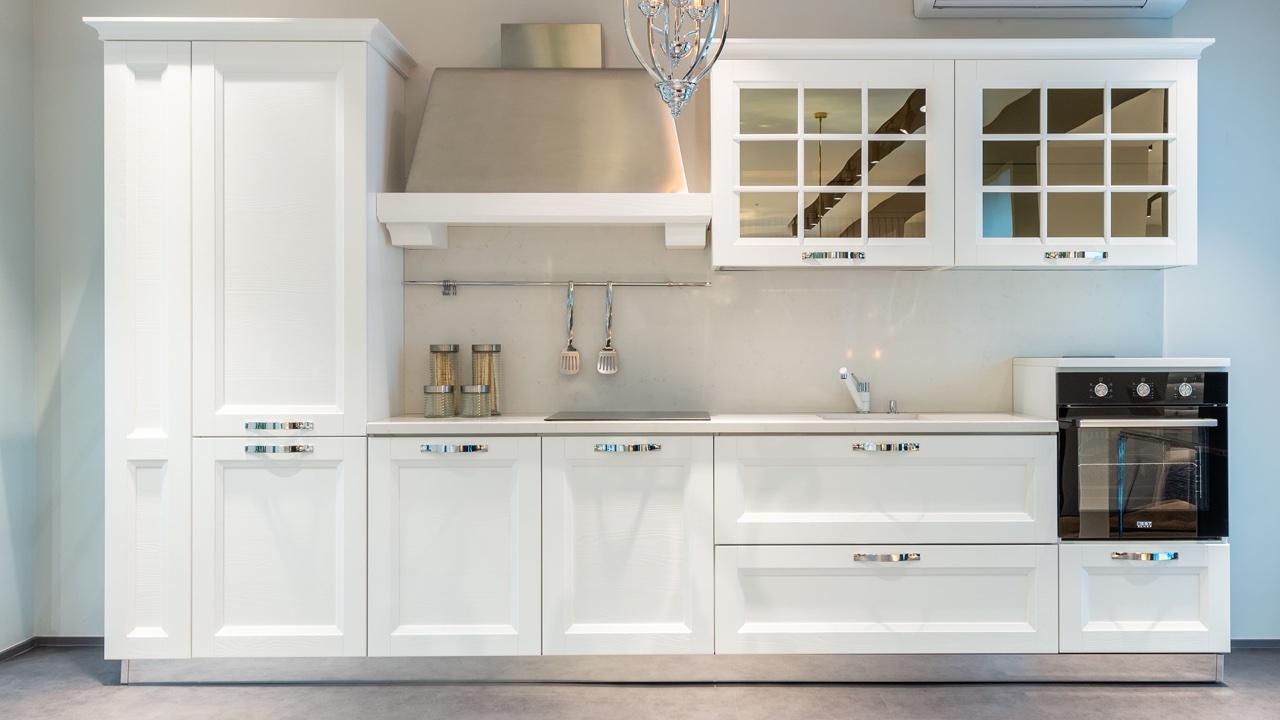
Walk into a furniture showroom and everything is already built. You pick a color, confirm a size from the available options, pay, and wait for delivery. The product exists before you do. Your job is to choose from what’s there.
Whole house customization works in the opposite direction. The product doesn’t exist until your project does. You submit floor plans and drawings. A manufacturer reviews them, proposes configurations, confirms materials and finishes, and then builds something that has never existed before — specific to your rooms, your dimensions, your brief. The sequence is completely reversed.
This distinction sounds abstract until you’re standing in a 2.7-meter-wide kitchen trying to figure out which of the four standard cabinet widths available at a furniture store actually fits.
What Gets Submitted at the Start
The starting point for a custom cabinetry project isn’t a product selection — it’s documentation. Floor plans, elevation drawings, room dimensions, ceiling heights, positions of windows and doors, locations of plumbing and electrical outlets. For hotel or apartment developer projects, this typically also includes a bill of quantities and finish specifications across multiple unit types.
This documentation is what makes custom manufacturing possible. The factory is building to your drawings, not to a catalog. If the kitchen runs 3.4 meters on one wall with a column interrupting it at 1.9 meters, the cabinet configuration accounts for that column rather than ignoring it. If the master bedroom wardrobe needs to wrap around a structural beam, the drawings capture that and the production is planned accordingly.
Standard furniture cannot do this. A 900mm-wide wardrobe panel is 900mm. It doesn’t wrap around a beam. The beam becomes a gap, a visible edge, or a problem that requires a custom workaround after the fact — often at higher cost and worse result than building to the drawings from the beginning.
How the Production Process Actually Works
After drawings are submitted and reviewed, a typical custom cabinetry process runs through several stages before anything gets built.
Material and finish selection happens first. For kitchen cabinets, this includes door style, door material (lacquer, veneer, melamine, solid wood), countertop material, hardware finishes, and interior fittings — pull-out systems, drawer organizers, soft-close mechanisms. For wardrobes, it includes panel finish, internal configuration (hanging sections, shelving, drawer units), and handle or handleless hardware. Each selection has downstream implications for production scheduling and cost.
After selections are confirmed, 3D renderings are produced. These show the finished result room by room before production begins, allowing the client or designer to identify issues — a drawer that would conflict with a radiator, a tall cabinet that interrupts a window, a finish that looks different under the project’s specific lighting than it appeared in the sample. Changes at the rendering stage are inexpensive. Changes after production begins are not.
Once the renderings are approved and contracts signed, production scheduling starts. Lead times for custom cabinetry typically run six to twelve weeks depending on project scale, complexity, and factory workload — significantly longer than furniture delivery times, which is why projects that require custom work need to initiate the cabinetry procurement early in the construction timeline.
Why Developers and Project Buyers Source Differently
For a single residential project, the custom process is a matter of getting the right product for a specific space. For a developer building two hundred apartments or a hospitality company fitting out a hundred hotel rooms, the logic is different.
At scale, consistency matters as much as quality. A hundred hotel rooms should have the same door gap tolerance, the same drawer slide action, the same finish appearance across the entire property. Achieving that consistency from a retail furniture chain — where stock varies by batch, delivery dates are unpredictable, and quality control is done at the point of sale rather than the point of production — is genuinely difficult. Achieving it from a single manufacturer running your specification through a controlled production process is significantly more reliable.
One-supplier procurement also reduces coordination overhead. When kitchen cabinets, wardrobes, bathroom vanities, and interior doors come from the same manufacturer, there’s one point of contact for technical questions, one production timeline to track, one shipping schedule to coordinate, and one party responsible for the outcome. When those categories are split across three or four suppliers, every interface between them becomes a potential misalignment — in finish, in timing, in who owns the problem when something doesn’t fit.
PIANO Interiors operates precisely in this space: a manufacturer whose scope covers the full range of interior cabinetry categories under one production system, serving residential developers, commercial projects, hotels, and villas at the scale where consistent output and project-based coordination matter more than showroom convenience.
What Custom Does Not Mean
It’s worth being specific about what custom manufacturing is not, because the word gets applied broadly.
Custom does not mean unlimited. Every manufacturer works within material options, hardware partnerships, and production capabilities that define what’s actually achievable. A factory that primarily works in melamine-faced board can typically accommodate a wide range of colors and textures within that system, but may not be the right partner for a project requiring solid hardwood frame-and-panel construction throughout. Understanding a manufacturer’s actual capabilities — rather than assuming “custom” means anything is possible — is part of the sourcing conversation.
Custom does not mean faster. The production lead time for custom cabinetry is longer than buying from stock, because the product is built after order rather than before. Projects that discover this late in the construction timeline are the ones that end up with site delays while waiting for cabinets, or that compromise by switching to whatever stock items are immediately available.
Custom does not mean more expensive by default. At project scale, custom manufacturing from a factory direct relationship is often price-competitive with retail or distribution-channel furniture because the margin structure is different. The cost comparison is not custom versus standard; it’s factory-direct custom versus retail-marked-up standard, which frequently favors the custom route once volume is sufficient.
The Right Question to Ask at the Start
The most useful question when beginning a project that includes cabinetry is not “what style do we want?” It’s “what do the drawings say?” The drawings determine what’s buildable. Style decisions follow from there.
A manufacturer who asks for the drawings first and proposes solutions from them is operating in a fundamentally different mode than a furniture supplier who asks what color you’d like from the available options. Both approaches result in cabinetry. What they result in — and how well it fits the actual space — is different.